How to build a landing page that actually wins clients
Key takeaways
- A landing page needs one clear goal
- The message has to be clear within seconds
- Proof reduces perceived risk
- Every section leads to the next action
The job of a landing page
A landing page is one of the hardest-working pages on your entire website. Unlike a homepage, which has to serve multiple audiences and goals, a landing page has just one job: turning a visitor into a lead or customer. Getting this right requires an understanding of landing page design best practices and implementing them precisely.
Whether you are running paid ads, launching a new service or building a funnel for your agency: knowing how to build a landing page that converts is a fundamental skill that pays directly into your bottom line. This guide walks you through every crucial element, from the hero section to the final call to action.
Design grabs attention, but landing page copywriting closes the deal. Every sentence on your page should have a purpose. If it doesn't move the visitor toward conversion, it doesn't belong there.
The essential landing page elements
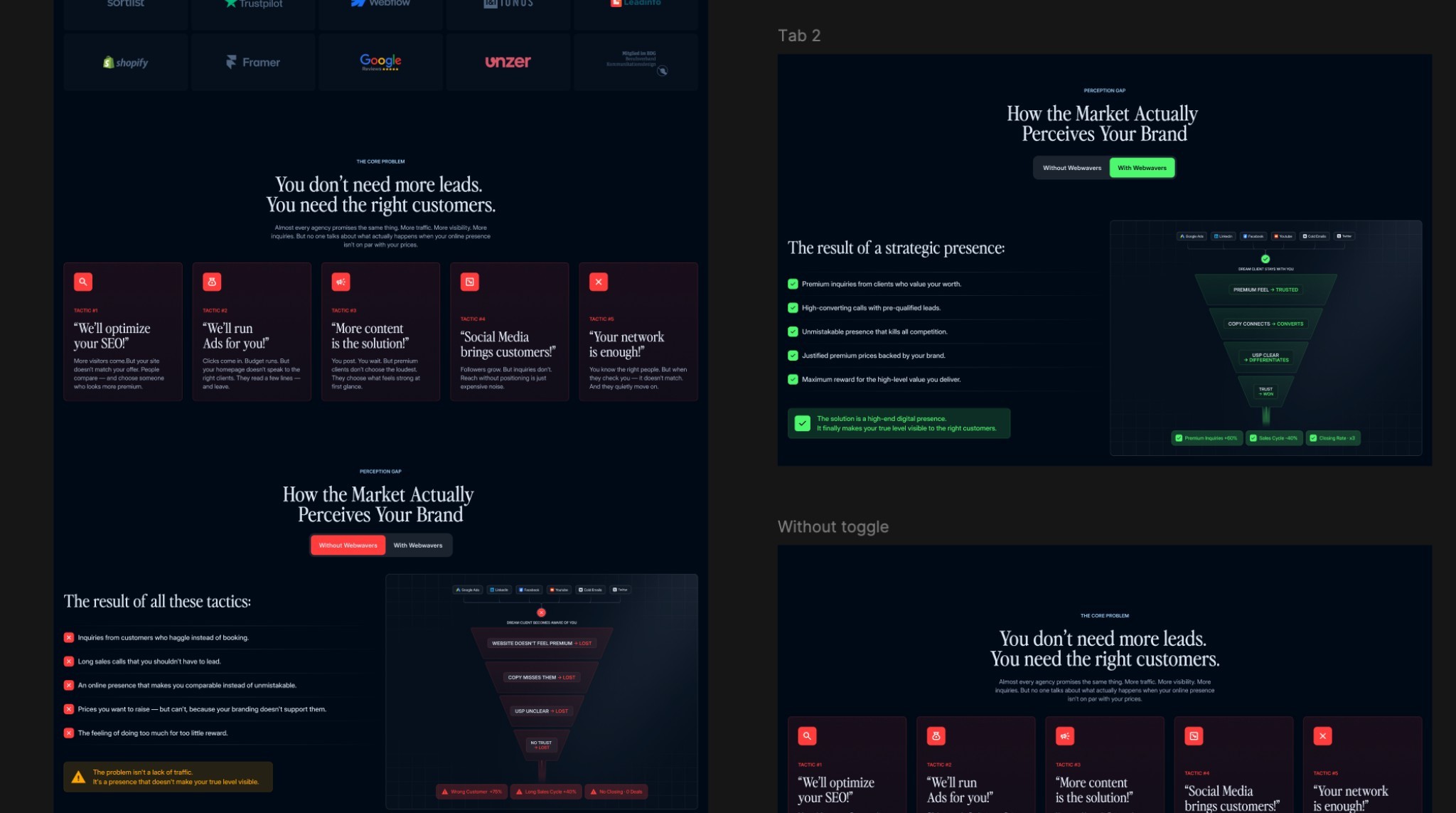
Before we go into detail, it is worth understanding the core landing page elements every high-performing page contains. When you study high converting landing page examples, you will notice they all share a consistent structure: a compelling hero section, a clear value proposition, supporting evidence, trust signals and a strong call to action. These elements of a great landing page work together as a persuasion system, not as isolated components.
The hero section
The landing page hero section is where first impressions are made. In under five seconds, it has to do three things: communicate what you offer, who it is for and why it matters. The headline should be benefit-oriented and specific. Avoid vague statements like "We help businesses grow". Instead, try something like "We build websites that turn visitors into high-value clients".
A strong hero section also includes a supporting subline that provides context, a clear CTA button and a visual element that reinforces the message, whether that is a product screenshot, a client result or a compelling image.
Social proof and trust signals
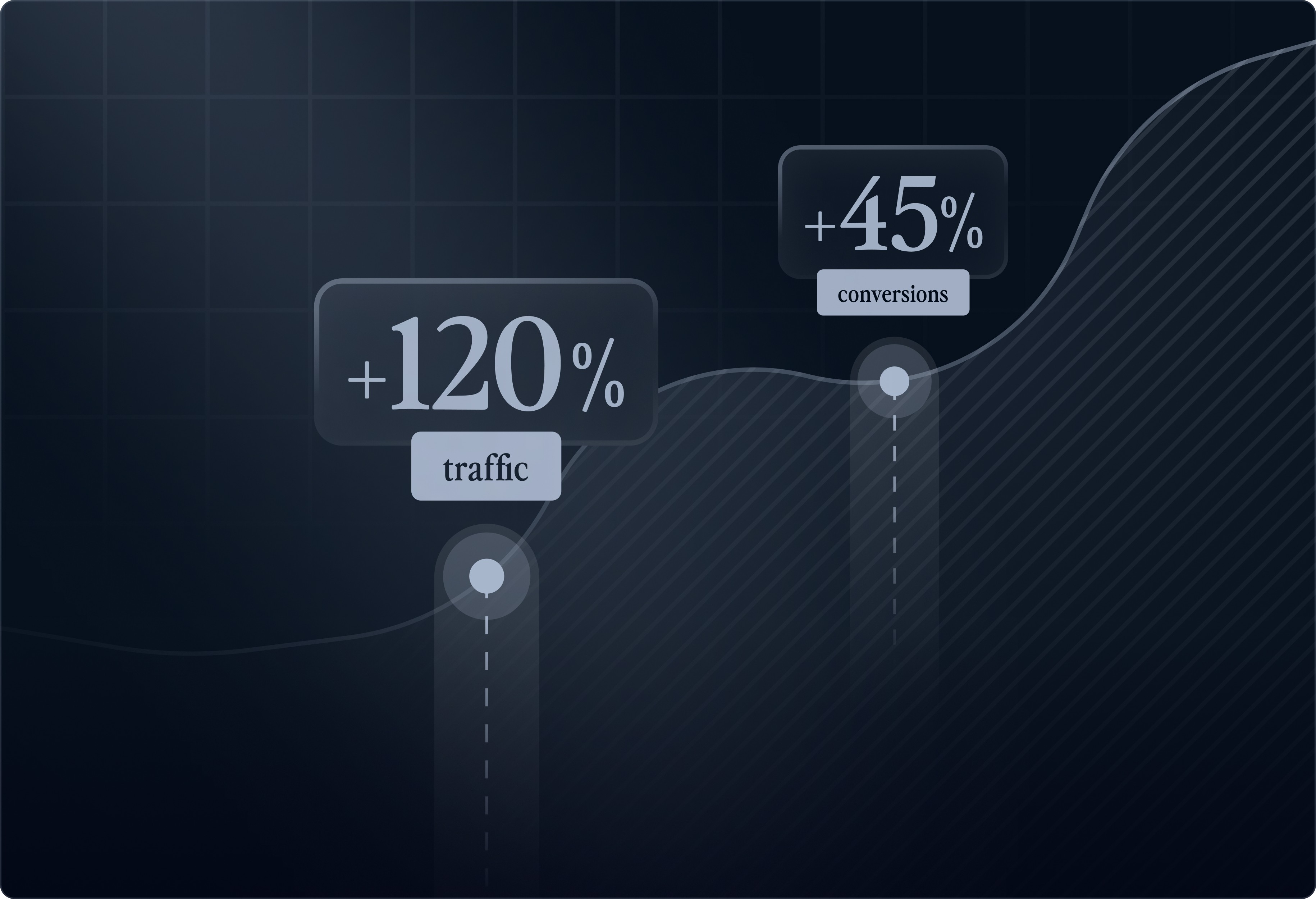
Placing testimonials on landing pages is one of the most effective ways to build credibility quickly. Visitor objections dissolve when they see that other companies have achieved real results with your service. Use specific, measurable testimonials whenever possible: "Revenue increased by 40 percent within three months" is far more convincing than "Great service, highly recommended".
Client logos, industry certifications, press mentions and case study excerpts all serve as trust signals that reduce hesitation and bring visitors closer to conversion.
The value proposition section
After the hero, your landing page should expand on the value you deliver. This section typically highlights key benefits, explains your process or approach and differentiates you from the competition. Keep the focus on results rather than features. Visitors care about what they will achieve, not the technical details of how you work.
The call to action
Your CTA should appear multiple times on the page: in the hero, after key sections and at the end. Every CTA should use action-oriented, specific language. "Book a free strategy call" is more compelling than "Contact". The button should stand out visually and contrast with the surrounding design.
Landing page copywriting that converts
Design grabs attention, but landing page copywriting closes the deal. The words on your page have to grab attention, convey value, build trust and prompt action. Clarity always beats cleverness: your visitor should never have to guess what you offer or what to do next.
Even though a complete landing page copywriting template varies by industry, the basic structure stays consistent: lead with the pain point, present your solution, back it up with proof and close with a clear next step. Every sentence should earn its place on the page. If a line doesn't move the visitor toward conversion, remove it.
Headlines and subheadlines
Your headline should speak directly to your audience and their primary challenge. The subheadline provides specificity and context. Together, they should make a visitor think: "This is exactly what I need."
Body copy
Keep paragraphs short. Use simple, direct language. Focus on benefits rather than features. Address common objections proactively in the copy. And always write in the language your customers actually use, not in industry jargon they may not understand.
Optimizing your landing page for performance
Building a great page is only the first step. Following landing page optimization best practices means continuously testing and refining every element to improve results over time.
Speed and technical performance
A slow-loading landing page destroys your landing page conversion rate before a visitor even sees your offer. Optimize images, minimize scripts and make sure your hosting infrastructure delivers fast load times worldwide. Every second of delay measurably reduces conversions.
A/B testing the key elements
Systematically test your headlines, CTA wording, page layout, form length and imagery. Understanding how to increase your landing page conversion rate requires a commitment to data-driven experimentation. Don't assume what works: test, measure and iterate.
Your optimization checklist
Every landing page should go through a landing page optimization checklist before going live: Is the headline clear and benefit-oriented? Is the CTA visible and present multiple times? Are trust signals in place? Is the page optimized for mobile? Does it load in under three seconds? Does the form only ask for essential information?
Building with intention: the bottom line
Understanding how to build a landing page goes beyond simply putting sections together. It is about creating a focused, persuasive experience where every element serves a purpose. The best landing pages feel effortless to navigate because they were carefully designed to eliminate friction and guide the visitor to a single, clear action.
Whether you are creating your first landing page or optimizing an existing one, the principles stay the same: lead with clarity, back it up with proof and make the next step obvious. Apply these landing page design best practices consistently, and your pages will deliver measurable results.


More articles