5 signs your business has outgrown its website
Key takeaways
- Growth changes what your website needs to do
- An unclear presence slows down sales
- New offers need an understandable structure
- A relaunch is a strategic decision
When the website no longer fits the company
Your website was the right solution when you built it. But businesses evolve, markets change, and what worked two or three years ago could be holding you back today. Knowing when it is time to redesign your website is one of the most important decisions a growing business can make. Waiting too long can cost more than acting early.
If you are unsure whether your current website is still serving you well, here are five clear signs that you need a new website and that it is time to invest in something better.
A slow, outdated website that no longer fits your brand is not just a visual problem but a business risk that costs you opportunities every day.
Signs 1 & 2: Outdated design and slow load times
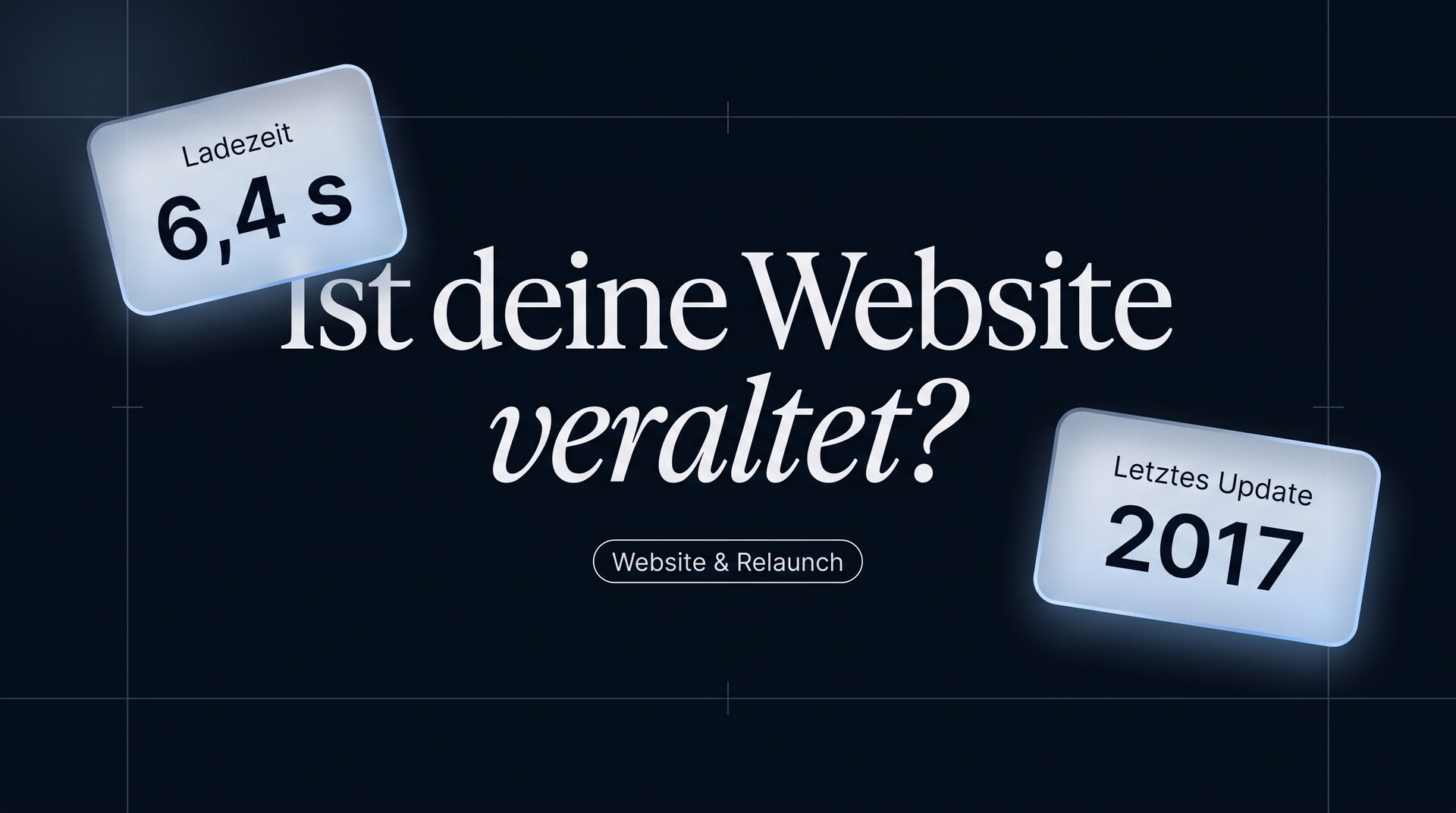
Sign 1: Your website looks outdated
Design trends evolve, and visitors notice. If your site shows design patterns from five years ago (stock photo banners, dated typography, cluttered layouts or an overall aesthetic that feels tired), it sends a message: your company hasn't kept up. An outdated website doesn't just look bad. It actively undermines trust in you.
If you are wondering whether your website is outdated, consider how it compares to your competitors. If their sites look modern, clean and professional while yours looks dated, potential clients will notice the difference, and they will draw conclusions about the quality of your work.
Outdated websites create a credibility gap that no amount of good content can close. If the design doesn't match the quality of your service, visitors leave the site before they even read your case studies or testimonials.
Sign 2: Your website is slow
In 2026, speed is no longer optional. If your website loads slowly, you lose visitors and rankings at the same time. Google uses Core Web Vitals as a direct ranking factor, and users expect pages to load in under three seconds. If your site consistently takes longer, bounce rates rise and conversions fall.
Sometimes the problem isn't your internet connection. If you notice that your website loads slowly even though your internet is fast, the problem almost certainly lies in your site's technical foundation: bloated code, unoptimized images, too many plugins or poor hosting infrastructure.
Speed problems rarely fix themselves. They tend to get worse as more content, plugins and patches are added over time. If your website is slow, it is often more cost-effective to rebuild it on a clean, modern framework than to keep patching an aging codebase.

Signs 3 & 4: Falling conversion rate and security concerns
Sign 3: Your conversion rate is falling
If traffic is stable but leads are declining, your website is probably the culprit. Understanding how to improve the conversion rate on your website often starts with recognizing that the current site is creating friction. Outdated layouts, unclear messaging, hidden CTAs and poor mobile experiences all contribute to declining performance.
A redesign built on conversion principles can transform results. When your site is built around a clear visitor journey, strategic messaging and prominent calls to action, the same traffic generates significantly more leads.
Sign 4: You have security concerns
Website security issues are a serious and growing risk, especially for sites running on older platforms with outdated plugins or unpatched vulnerabilities. If your site has been compromised, is flagged as unsafe by browsers or runs on software that no longer receives security updates, a redesign is not optional but urgent.
Modern platforms like Webflow handle security at the infrastructure level, including automatic SSL, managed hosting and built-in DDoS protection. Rebuilding on a secure platform eliminates the ongoing uncertainty and risk that come with maintaining an aging tech stack.
Sign 5 & your website redesign checklist
Sign 5: Your business has evolved
Perhaps the most common reason for a redesign is simply that your company is no longer what it was when the site was built. New services, new positioning, a new audience or a complete rebrand all require a website that reflects who you are today, not who you were two years ago.
When you should redesign your website often comes down to alignment. If there is a gap between your current brand and what your website communicates, that gap costs you opportunities every day.
Your website redesign checklist
Once you have decided it is time, a strategic approach is crucial. A thorough website redesign checklist ensures nothing important is overlooked and that the new site performs from day one.
Start with the right questions: What are the primary goals of the new site? Who is the audience? What actions should visitors take? What content needs to be migrated? What technical requirements are there?
Preserving SEO
A website redesign SEO checklist is essential so you don't lose search rankings during the transition. Map all existing URLs and set up correct 301 redirects. Preserve or improve meta data. Keep your content hierarchy and internal linking structure. Monitor search performance closely in the weeks after launch.
Performance benchmarks
Set clear performance goals for the new site: load time under three seconds, mobile-first design, passing Core Web Vitals scores and improved conversion rates compared to the current site.
Content strategy
A redesign is the perfect opportunity to review and improve your content. Remove outdated pages, strengthen key messages and make sure every page serves a clear purpose in the visitor journey.

Don't let your website hold you back
Understanding when it is time to invest in a website redesign means recognizing the turning point where your current site does more harm than good. A slow, outdated website that no longer fits your brand is not just a visual problem but a business risk.
If your website no longer reflects the quality of your work, the standards of your brand or the expectations of your clients, now is the right time to act. A strategic redesign is one of the highest-return investments a growing business can make.


More articles