Generative Engine Optimization: how to show up in AI answers


Key takeaways
- Generative search systems give answers instead of links. What gets cited is what can be cleanly extracted.
- Structure beats volume: clear definitions, short paragraphs and named sources matter more than text length.
- A large part of content is invisible to AI crawlers because it is only loaded via JavaScript.
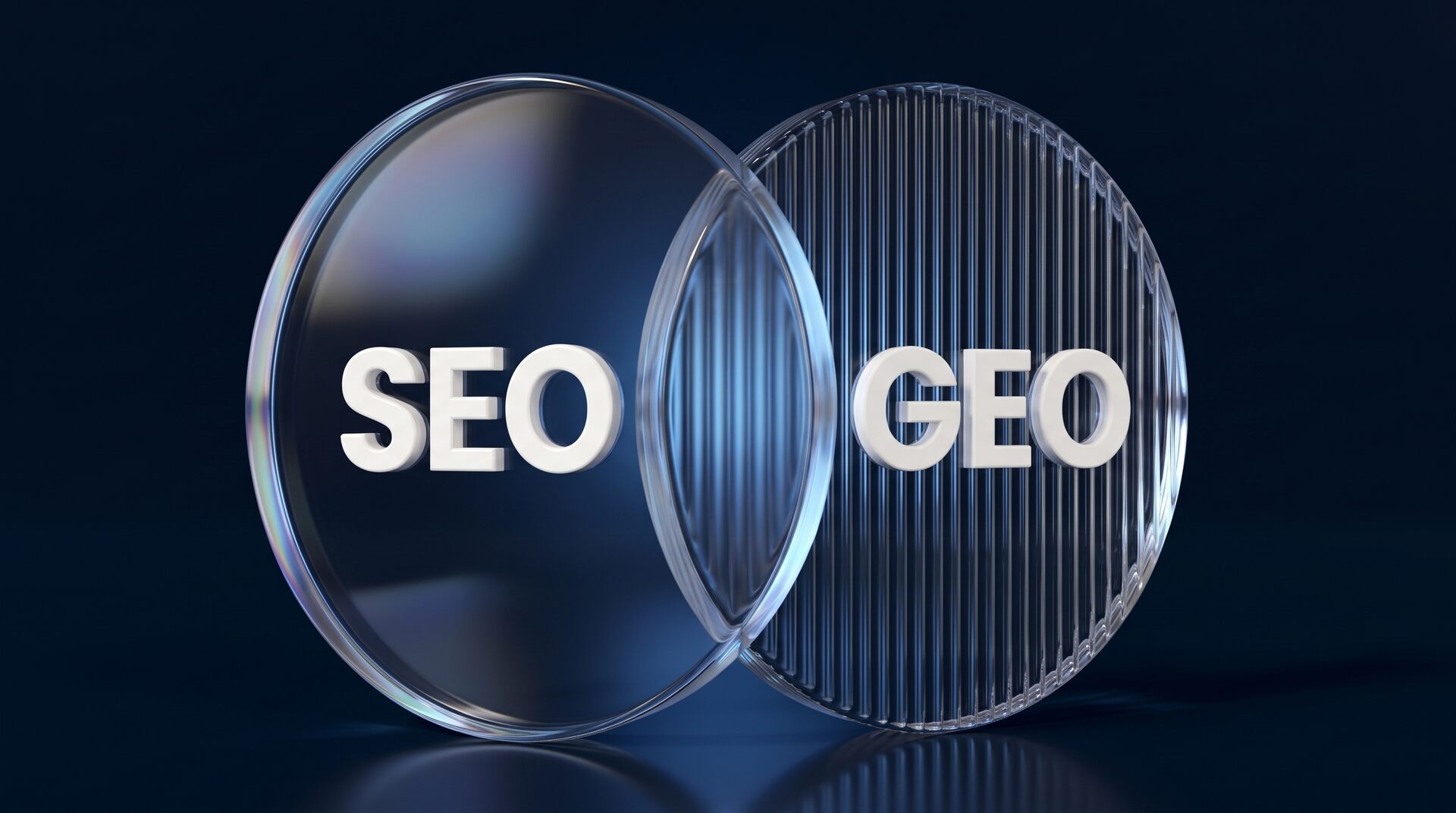
- GEO doesn't replace SEO: around eighty percent of the work pays off for both.
What has actually changed
Classic search delivers a list of links. The user decides which one to follow. Generative systems like ChatGPT, Perplexity or Google with AI answers instead deliver a written answer and name a few sources.
This leads to a different kind of competition. It is no longer just about being in first place, but about appearing in the answer. And different rules apply: it is not the most comprehensive page that wins, but the one from which a precise sentence can be extracted.
Generative Engine Optimization (GEO for short) describes the work of preparing content so that it shows up in answers like these.
The sentence that saves the most work
It isn't the most comprehensive page that wins, but the one from which a precise sentence can be extracted. So write the key statement of each section as a sentence that works on its own. That saves more work than any additional paragraph.
The first hurdle: being seen
Before talking about wording, one fundamental point has to be settled: most AI crawlers don't execute JavaScript. GPTBot, ClaudeBot, PerplexityBot and the rest see the delivered HTML, and nothing else.
This has consequences many companies underestimate. Content in expandable sections that only loads on click is invisible. Glossaries whose definitions are fetched via a query are invisible. Anything that is only created in the browser doesn't exist for these systems.
The test takes two minutes: open the page, view the source code, search for a sentence from the content. If it isn't there, it doesn't exist for AI systems, no matter how good it is.
Writing to be cited: the extractable paragraph
Generative systems extract text blocks. The better a paragraph works on its own, the more likely it is to be used.
This leads to three habits. First: the answer comes at the beginning, not the end. If you lead up to it first and then resolve it, you don't deliver an extractable paragraph. Second: one thought per paragraph, three to five sentences. Third: resolve references. A paragraph that starts with “This leads to” loses all meaning outside its context.
Definitions are especially effective. A sentence following the pattern “X is Y that does Z” is cited above average because it can be used without adjustment.
Structure machines can read
For generative systems, headings are signposts. An H2 phrased as a question signals directly which question the following section answers, and that is exactly what is being searched for.
Lists and tables are used disproportionately often because they already have the form in which the answer is supposed to appear. Hiding a list in body text gives that away.
Then there is structured markup: article, FAQ and definition markup give machines a second, unambiguous copy of the information. That doesn't replace good content, but it removes ambiguity.
Evidence, numbers, names
It is striking how strongly generative systems prefer content that can be verified. A statement with a number, a year or a named source is used far more often than the same statement without one.
This also applies to your own experience, as long as it is stated concretely. “In more than 250 completed projects” carries more weight than “many years of experience”, not because it sounds more impressive, but because it is phrased in a verifiable way.
The same goes for people: a text with a named author and job title is weighted differently than an anonymous one. That is one of the reasons why author details on expert articles are not an afterthought.
How to measure whether it works
The honest answer: only to a limited extent. There is no Search Console for AI answers.
What there is: the direct test. Ask the questions you want to be named for in ChatGPT and Perplexity, the way a customer would ask them. Note who gets named. Repeat this monthly. It is unscientific, but it is the only measurement that points directly at your goal.
In addition, you can check in the server logs whether GPTBot and others fetch your pages at all. If they don't come, all content work is pointless.


More articles